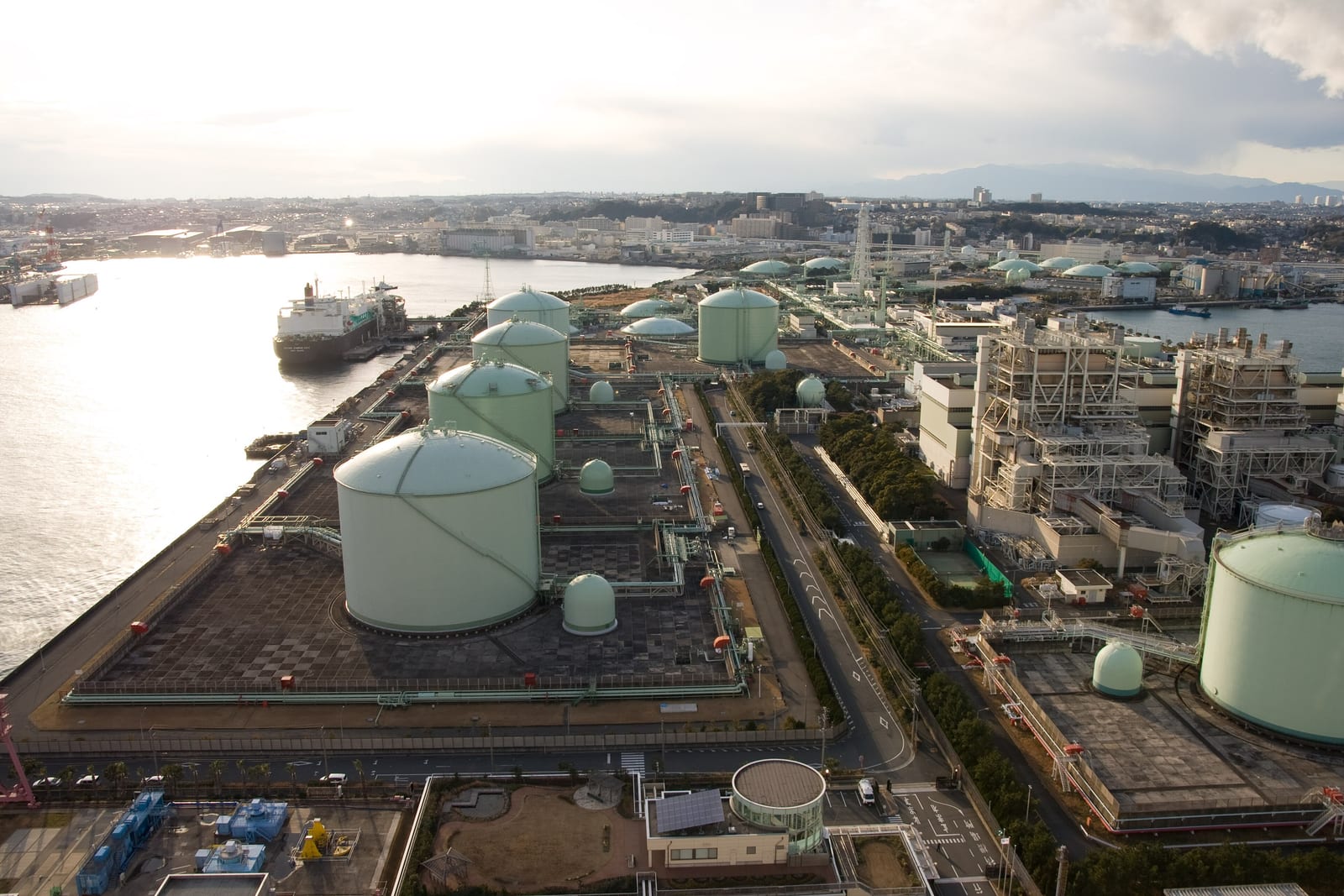
Energia Costa Azul, Mexico's second liquefied natural gas export terminal, sent out its first cargo on July 8 as Phase 1 entered service, according to the project's developer.
That single train is enough, the U.S. Energy Information Administration (EIA) said, to triple the country's total LNG export capacity. A train, in LNG terms, is one processing line that cools natural gas into liquid form for loading onto tankers. Phase 1 runs one; a proposed Phase 2 would add two more, larger, trains.
Key figures
- Phase 1: 0.4 Bcf/d of nominal export capacity from one train
- DOE-cleared exports: 0.50 Bcf/d to countries with a US free trade agreement, 0.44 Bcf/d to countries without one
- North American Pacific Coast total: 2.2 Bcf/d, combining Energia Costa Azul and LNG Canada
- Proposed Phase 2: 1.6 Bcf/d of nominal capacity from two large trains
Pacific coast berth, US-sourced gas
Energia Costa Azul is Mexico's first LNG terminal on the Pacific Coast, and only the second in North America to sit there after LNG Canada. A Pacific Coast berth cuts the sailing distance to buyers in Asia, the EIA said.
Its cargoes still need sign-off from the US Department of Energy, since the feed gas for the plant comes from the United States even though the terminal sits across the border in Mexico.
A bigger phase 2 is on the table
Sempra has proposed a second phase for the site, Phase 2, which would bring two more, larger trains online and add 1.6 Bcf/d of nominal capacity if it goes ahead.