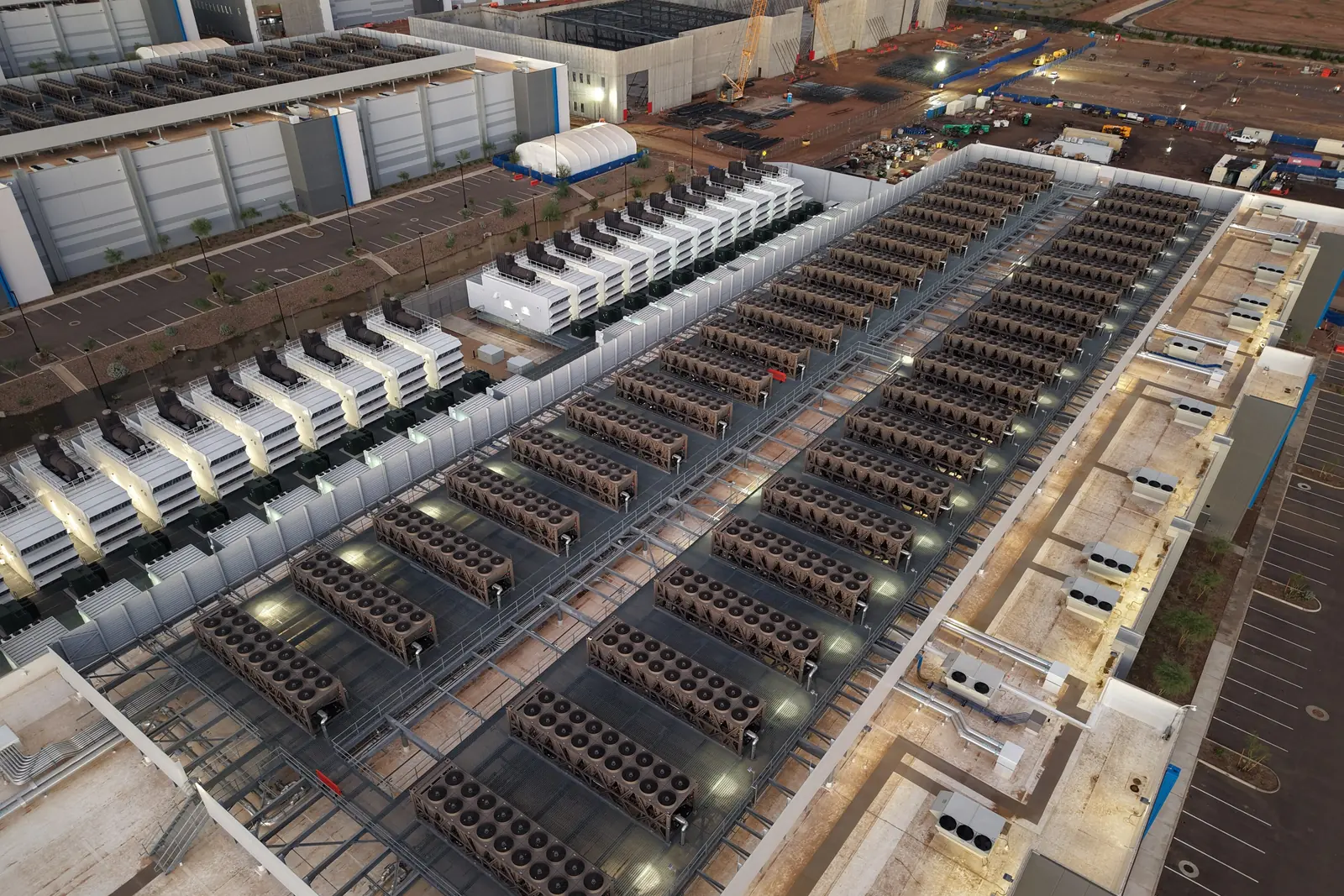
PJM told the Federal Energy Regulatory Commission's annual Reliability Technical Conference on Oct. 21 that about 3,900 MW of large loads unexpectedly moved to backup generation on July 22, and that the grid needs enforceable rules for how data centers behave during disturbances.
The transfer was triggered by routine transmission events. PJM and transmission owners managed it, but it caused voltage fluctuations that PJM described as concerning. PJM is now developing voltage and frequency ride-through requirements based on that event. Ride-through standards would set the thresholds at which facilities must stay connected rather than disconnect and threaten system stability. PJM is also taking part in North American Electric Reliability Corp. work to draft standards for Large Computational Loads.
Constant demand strains maintenance seasons
Christopher Pilong, PJM's senior director of operations planning, spoke on the conference's first panel. He said data centers use power at a nearly constant rate, unlike traditional seasonal or time-of-day demand. That makes reliability harder to maintain in the spring and fall shoulder seasons, when generation and transmission owners usually take equipment out of service for maintenance and upgrades.
"It really is like a rising sea level," Pilong told commissioners. "It is every hour of the day."
He pointed to Oct. 12-14, when hot weather up to 20 degrees above normal hit PJM and grid operators to the west and south. With large amounts of generation and transmission offline, conditions can trigger emergency procedures, and that occurred during those days. "Two to three years ago, we would not have seen that," he said. Until new generation and transmission come online, he added, operational flexibility and emergency procedures will keep being needed.
PJM's four reliability priorities
In a prefiled statement at FERC, Pilong said PJM supports a framework that:
- Requires timely, accurate and continuously updated technical information from large load operators
- Establishes enforceable voltage and frequency ride-through requirements for new and existing large loads
- Ensures interconnection and energization decisions reflect the time needed to build enough generation and transmission
- Advances coordinated electric-gas planning, cybersecurity protections and accountability for facility performance
PJM is also looking at how large loads can connect safely, share inverter-based models and settings, log incident data and report on performance. It named coordinated, malicious acts as a continuing threat that supports system controls, incident reporting, operational coordination and recovery requirements.
Compute flexibility and non-firm service
Commissioners and participants discussed frameworks that would let grid operators, transmission owners, state regulators and data centers synchronize operations. One example was PJM's work with Emerald AI and other data center customers on cutting power use for certain computational jobs, with the aim of reducing impacts on residential customers. These practices, called compute flexibility, are being or will be studied at multiple data centers in the PJM service area, including an NVIDIA AI factory in Manassas, Virginia.
PJM is also preparing its response to FERC's call for interim, or non-firm, transmission service frameworks. Pilong said PJM works with generation and transmission owners it knows will follow an operating instruction, and it will need the same response from data centers while construction catches up with demand. "There is no other solution," he said.
On FERC's policy agenda, the conference put PJM's case for ride-through rules and large-load reporting on the record.