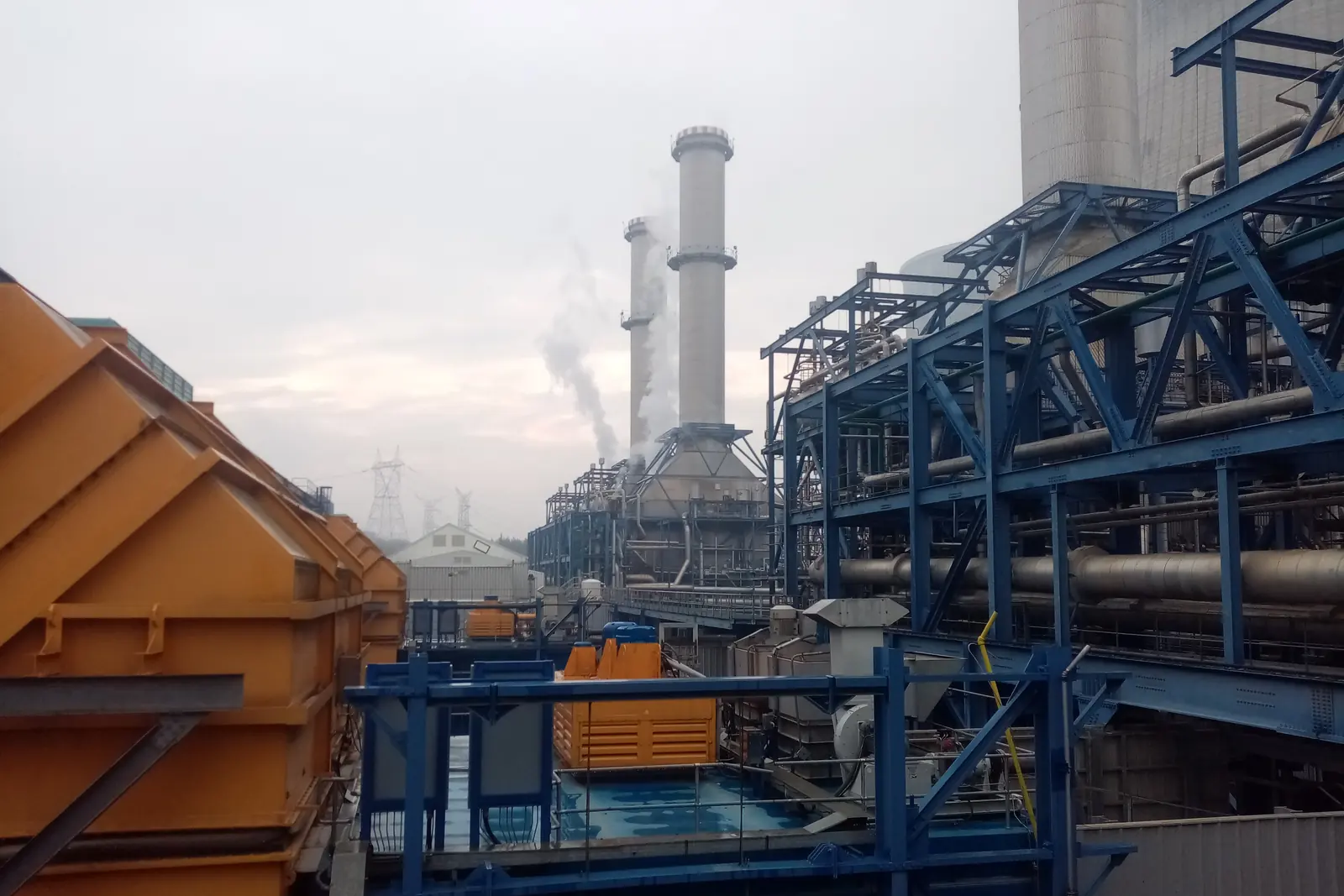
RWE and Kawasaki Heavy Industries (KHI) have commissioned a 34-megawatt gas turbine at the Emsland gas-fired power station in Lingen that can run on up to 100 percent hydrogen. The companies say it is the largest hydrogen-compatible turbine of its kind in Europe, and that it will generate electricity from hydrogen on an industrial scale for the first time.
The turbine accepts any blend of natural gas and hydrogen, from none to pure hydrogen. Over the coming months, RWE and Kawasaki will use it to test generation on up to 100 percent hydrogen, running various operating modes and load conditions that may matter for flexible power stations in a system built on wind and solar. The field trial is scheduled to run for several months.
Hydrogen made next to the plant
The hydrogen for the trial comes from the GET H2 Nukleus electrolysers, which sit directly beside the power station. They split water into hydrogen and oxygen using electricity from renewable sources, and for the length of the test the hydrogen goes into the turbine as fuel. The combustion systems are designed for safe and stable operation across different shares of natural gas and hydrogen. The technology has already been tested in smaller plants and is being scaled to the 34-megawatt class in Lingen for the first time.
Why flexible plants are in the frame
As wind and solar supply a larger share of electricity, the companies point to a need for flexible capacity that can cover prolonged periods when those plants fall short. Hydrogen-compatible gas-fired stations are being designed to provide that backup. RWE recently won a Federal Network Agency tender for flexible power stations.
What the companies said
Nikolaus Valerius, CEO of RWE Generation, called the project "unique in Europe" and said the turbine produces up to ten times as much power as previous hydrogen turbines. He said the experience will matter for deploying even larger turbines.
Motohiko Nishimura, President of Kawasaki's Energy Solution & Marine Engineering Company, said the co-firing ratio can be adjusted according to hydrogen availability and cost.
The ceremony was attended by Olaf Lies, Minister-President of Lower Saxony, and Mitsuko Shino, the Japanese Ambassador to Germany, along with representatives of KHI, the Japanese funding organization NEDO and RWE. About 130 guests were present.