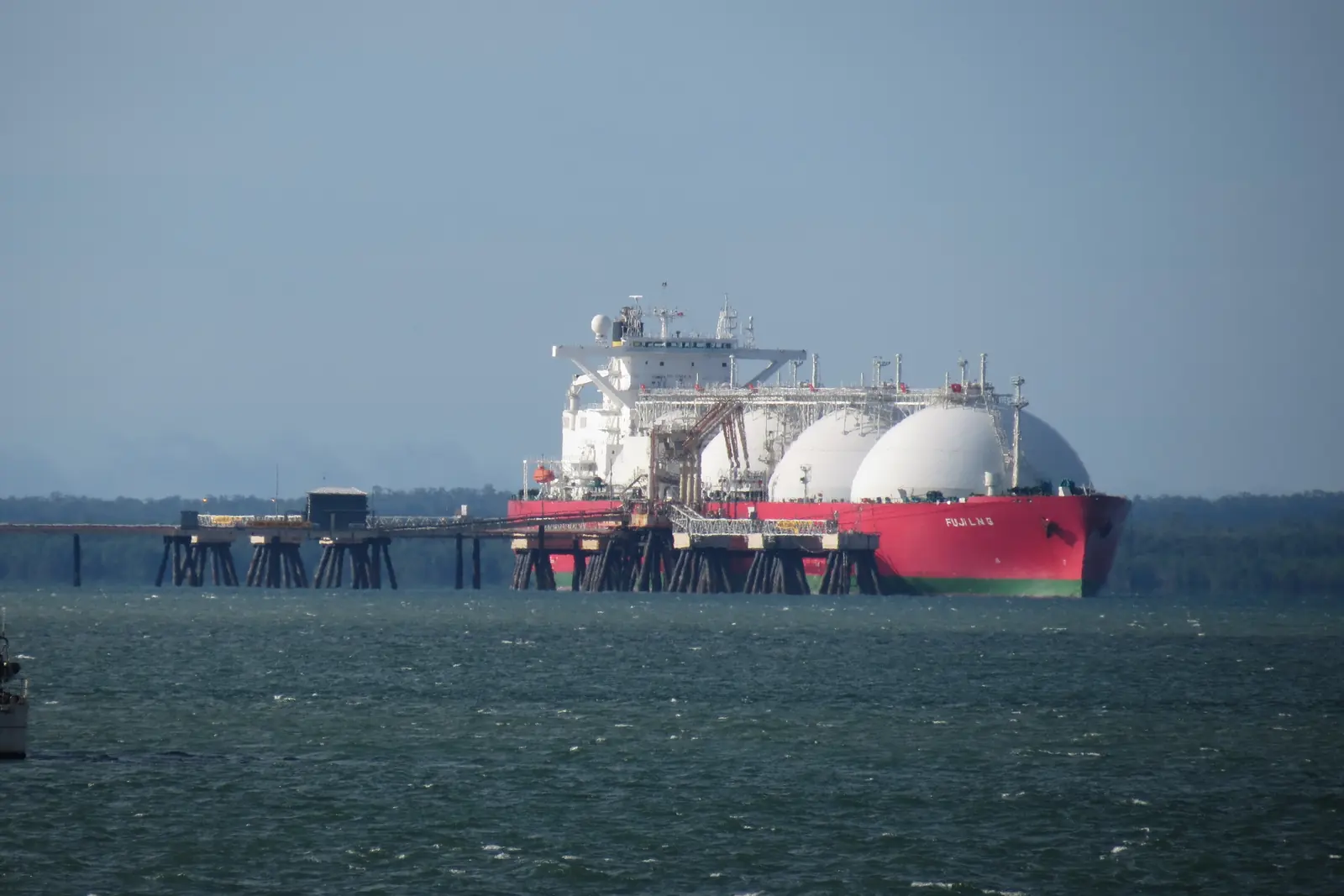
Liquefied natural gas (LNG) supplied a record 31% of Colombia's monthly natural gas in July 2026, according to data from BEC, the country's gas market administrator. The U.S. Energy Information Administration (EIA) says imports are rising because domestic production keeps falling.
Average annual marketed production dropped from 1,070 million cubic feet per day (MMcf/d) in 2022 to 772 MMcf/d in 2025, BEC data show. From January to August 2026 it averaged 673 MMcf/d. Most of the country's gas comes from Cusiana, Cupiagua, Pauto Sur and the offshore Guajira fields, and all have been declining since 2022 with no large discoveries developed to replace them. Proved reserves fell 39% to 1.7 trillion cubic feet between 2022 and 2025, according to the National Hydrocarbons Agency.
Import capacity is limited and expanding
Colombia has one operating LNG import terminal, SPEC LNG, near Cartagena on the Caribbean coast. Promigas says an expansion there could come online in 2026, possibly as early as the end of October. The Buenaventura LNG terminal is targeting startup by November 2026, and the Puerto Bahia and Ballenas LNG terminals could start operations next year.
El Niño raises the stakes for power
Colombia's government has declared a national disaster in anticipation of a drought from an expected strong El Niño. NOAA's Climate Prediction Center issued an El Niño Advisory in October 2026 and gives a greater than 83% chance of a strong to very strong event through the first quarter of 2027. El Niño typically brings drier-than-normal weather to northern South America from December through February, which reduces hydropower.
Gas use in the power sector spiked in 2023 and 2024, when a strong El Niño was in place. The generation mix has already shifted this year.
| Period | Hydropower | Natural gas | Coal |
|---|---|---|---|
| 2025 (annual) | 81% | 8% | 4% |
| March 2024 | 55% | 22% | 15% |
| July 2026 | 66% | 12% | 12% |
EIA expects natural gas to play a larger role in electricity generation if a strong El Niño persists.