Democrats won six of the seven governor's races that Latitude Media tracked for their energy stakes, and four of the winners want a pause or ban on new data center construction. Republican Byron Donalds took Florida, the only one of the seven to go red.
Democrats also won both chambers of Congress, with both results called by midnight Eastern, according to Latitude Media. From January the party will have the power to investigate the Trump administration, including its moves to block federal permits for renewable energy projects and cancel Department of Energy awards. Whether Congress can pass the bipartisan permitting reform bill introduced in the Senate during the lame duck is unsettled. Rep. Jared Huffman of California has said he wants to hold out for a bill that fits the left's priorities better.
The nearer-term effect is in the states, where Democrats gained ground in governors' mansions, public utility commissions and legislatures, including in Georgia, Texas and Wisconsin. Gasoline prices have spiked because of the Iran war, which President Trump himself acknowledged was a major factor in the Republican defeat. Electricity rates are also up. Candidates ran on energy policy themes of affordability, utility accountability and pushback against data centers.
Four governors-elect want data center limits
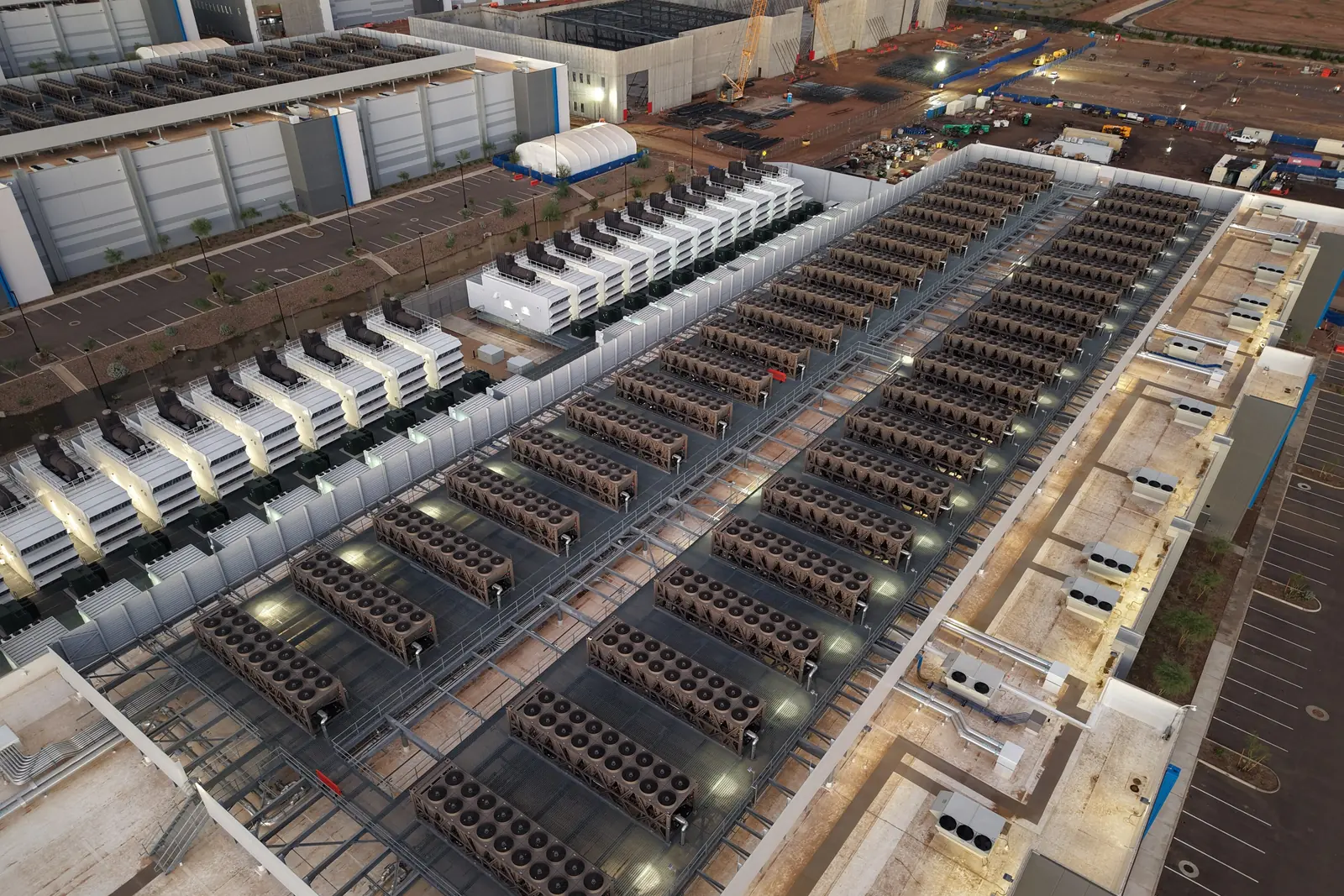
In Texas, Gina Hinojosa defeated Republican Gov. Greg Abbott, ending three decades of GOP control. She wants a moratorium on new construction until lawmakers pass stronger local protections, including on energy and water use, and she wants to end tax breaks for the industry. Texas is the second-largest U.S. data center market, behind northern Virginia. Earlier this year Abbott ordered ERCOT and environmental regulators to stop connecting new data centers and issuing permits until an audit of projects in the pipeline is finished. Democrats running for the Texas House are leading in at least a dozen districts that Republicans hold now, the Texas Tribune reported.
In Wisconsin, David Crowley supports a pause while the state completes a statewide environmental review. He also wants to repeal a sales tax exemption on data center property and construction equipment, require 100% renewable power, and make projects pay for grid upgrades. Cleanview is tracking at least 30 data center projects in the state, including the nearly one-gigawatt Project Lighthouse, part of Oracle and OpenAI's Stargate initiative. Democrats now hold a state government trifecta for the first time in 16 years.
In Ohio, Amy Acton defeated Republican Vivek Ramaswamy. She backs a conditional moratorium that would require data centers to cover 100% of their energy costs, bring their own generation, use union labor and meet state environmental standards. AEP Ohio already has a large-load tariff meant to shield ratepayers from stranded-asset costs. Analysts at Bank of America expect an Acton administration to add policy uncertainty. Her power to appoint members of the public utility commission could make the debate "more durable than a campaign-only issue," they said in a note.
In Georgia, Keisha Lance Bottoms will be the first Democrat to lead the state in 25 years. She has called for a year-long ban on data center construction, citing the effect on utility bills. The Georgia Public Service Commission also flipped blue for the first time in three decades. Incumbent Democrat Peter Hubbard won re-election and will be joined by Sheila Edwards, who defeated Republican Josh Tolbert. Georgia Power has a rate freeze in place that the commission could extend through 2031.
Utilities, rates and Florida
In Michigan, Jocelyn Benson beat Republican John James, so the state's 100% clean energy mandate by 2040 will likely stay intact. Voters also passed a ballot initiative that bars DTE Energy and Consumers Energy from donating directly to state politicians. The two companies plan to spend a combined $60 billion through 2030 on grid upgrades and on solar, wind and battery storage. The public utility commission, appointed by the governor and confirmed by the state senate, will oversee that spending.
In Nevada, Aaron Ford unseated Republican Gov. Joe Lombardo. Ford wants to reverse NV Energy's new peak demand charge, approved by Lombardo-appointed regulators, which would raise bills for many rooftop solar customers.
In Florida, Donalds opposed the year-long statewide moratorium that Democrat David Jolly proposed and said data center siting should be left to local decision. Donalds has backed fossil gas and small modular nuclear over solar for data centers, citing land use. Florida ranks third nationally in solar capacity.