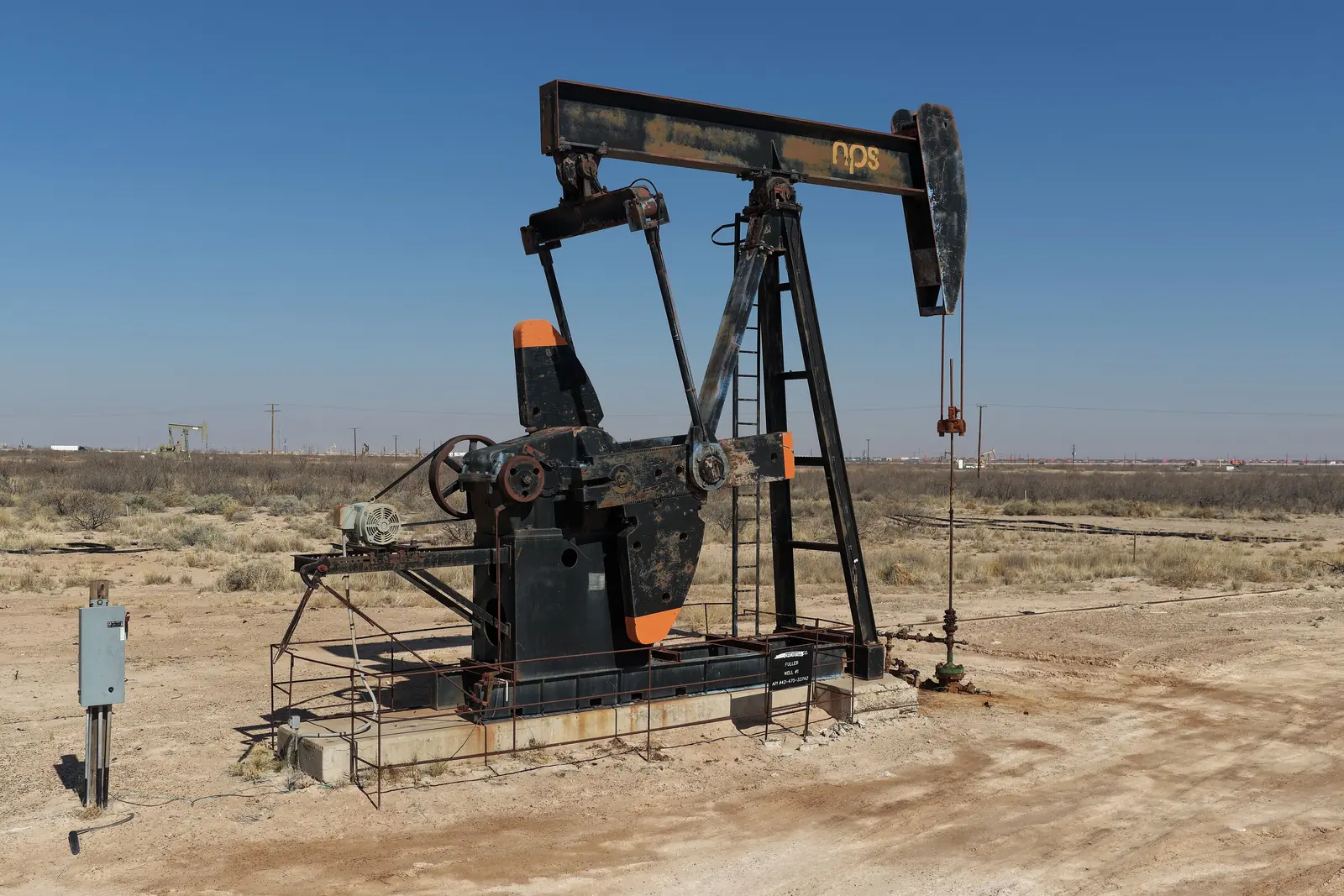
Diamondback Energy's total production averaged 1,018 thousand barrels of oil equivalent per day in the second quarter of 2026, the first time the company's average output has topped 1 million barrels of oil equivalent per day, according to an August 3, 2026 letter to stockholders. Oil production averaged 525 thousand barrels per day, 1% above the first quarter and at the top end of guidance.
On the back of that outperformance, Diamondback Energy raised its full-year oil production guidance to 522+ MBO/d, from 520+, and its full-year total production guidance to 1,000+ MBOE/d, from 972+. Full-year capital expenditure guidance held at approximately $3.90 billion. Cash capital expenditures for the quarter were $996 million, in line with guidance.
Costs and cash flow
Lease operating expense fell to $5.96 per barrel of oil equivalent in the quarter, from $6.21 in the first quarter, and cash general and administrative expense dropped to $0.52 per BOE from $0.65. Combined, total cash operating expense came to $10.96 per BOE, down about 3% from the prior quarter.
Diamondback generated $3.6 billion in net cash from operating activities, which translated to $2.3 billion each in Free Cash Flow and Adjusted Free Cash Flow. Measured against the second quarter of 2024, nearly two years after the company's Endeavor merger closed:
- Net cash from operating activities per share is up 49%
- Free Cash Flow per share is up 81%
- Oil production per share is up 21%
Since 2016, the company said:
- Net cash from operating activities per share has grown roughly nineteenfold
- Oil production and reserves per share have more than quadrupled
- The dividend has compounded 8.8 times since it started in 2018
Gas realizations swing negative, then recover
Second-quarter gas realizations were negative $2.15 per Mcf before hedges, which Diamondback attributed to pipeline takeaway capacity trapping gas in West Texas. Spring pipeline maintenance pushed the local benchmark further, driving Waha pricing to a record low of about negative $10 per Mcf. The company said basis hedges layered on over the past couple of years cushioned the swing. With new takeaway capacity coming online, Waha turned positive in July and has held up since; Diamondback said its additional secured long-haul pipeline capacity to the Gulf Coast is expected to more than double its long-haul takeaway by the end of the year.
The company said it believes in the long-term case for U.S. gas demand growth, pointing to LNG export buildout and power generation, including AI data centers, as sources of incremental demand, and it reiterated that the Permian 'hasn't even tried to produce gas yet.'
Operations
The drilling team set a company record with a 31,465-foot total-depth well, drilled the three lowest-cost Wolfcamp D wells in Diamondback's history, and completed its first six 'U-turn' wells, 3-mile laterals drilled 1.5 miles out and back. The completions team ran its first full quarter of continuous pumping, averaging 21.3 hours of pumping time per day and about 4,700 lateral feet completed per day, while equipment cost per well fell about 14% from the prior quarter. The company's gas offload strategy contributed to an estimated 24% reduction in flaring from the prior quarter, which it said protected about 1,400 thousand barrels of oil that otherwise would have been choked back due to takeaway constraints.
Diamondback's chemical enhanced oil recovery program moved into a second batch of well tests, which the company said are showing encouraging results, building on a 50-well pilot program completed in the second half of 2025.
Macro backdrop
Diamondback said the disruption of oil flows through the Strait of Hormuz triggered the largest supply shock in the history of the global oil market, with global oil production in May estimated 13.6 million barrels per day below pre-conflict levels and global observed inventories drawing an estimated 143 million barrels that month, citing the International Energy Agency's Oil Market Report for June 2026. The company said it responded by adding a completion crew and drawing on its inventory of drilled-but-uncompleted wells to bring incremental barrels to market. WTI crude stood at $84.65 a barrel and Henry Hub gas at $3.06 per MMBtu as of June 15, 2026, according to the U.S. Energy Information Administration; the U.S. rig count was 562 that same day, according to Baker Hughes.