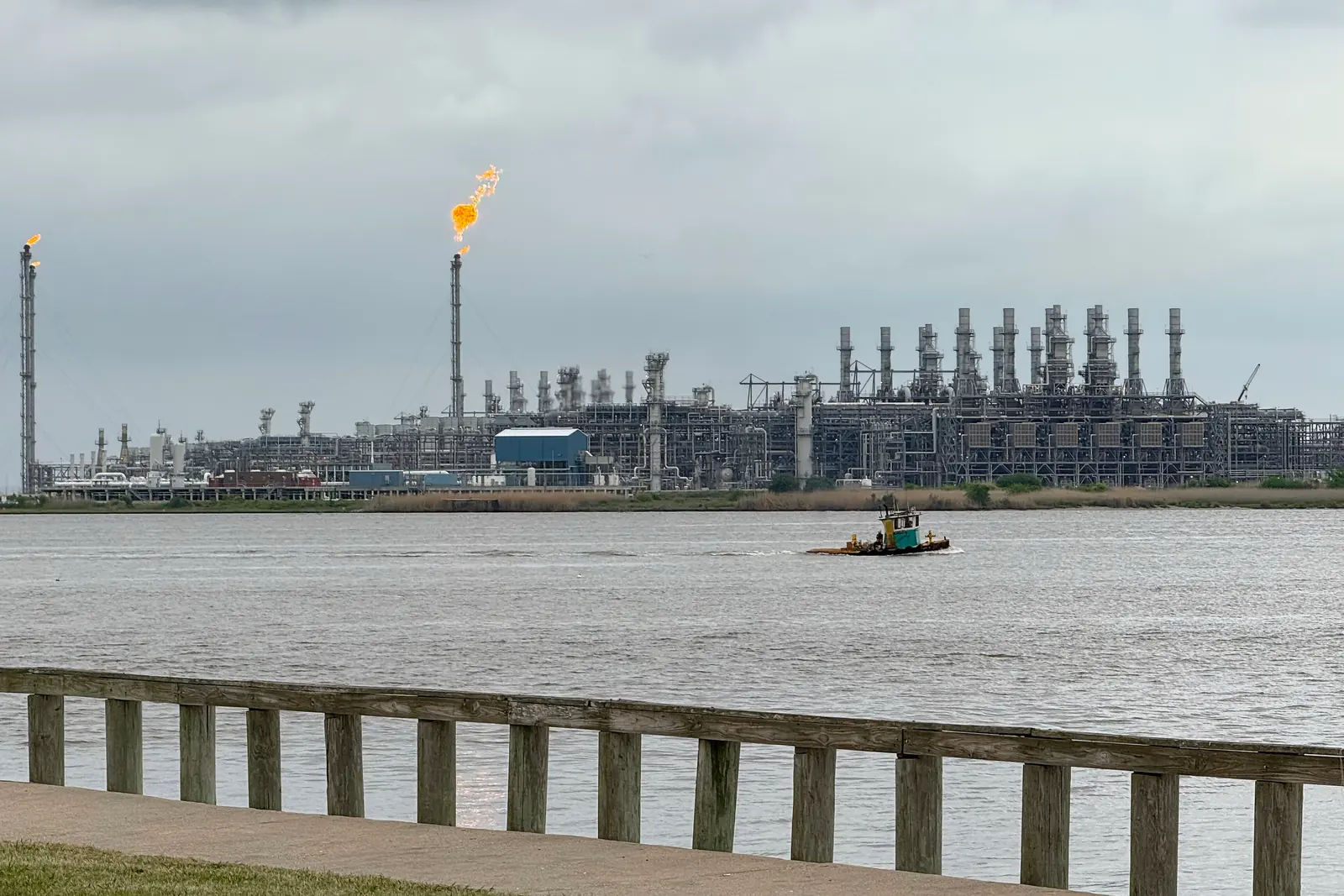
Sempra's Port Arthur LNG unit has begun federal permitting for a proposed North expansion in Jefferson County, Texas, 77 miles east of Houston. The plan calls for up to four additional liquefaction trains, three LNG storage tanks and two marine berths.
Capacity and timeline
Sempra lists the proposed export capacity at about 26 MMtpy. The regulatory filing describes maximum output approaching 27 MMtpy. Sempra also says a fully built North project could add roughly 26 Mtpa of export capacity to the overall Port Arthur LNG facility. Exports could begin in the second half of 2034.
Sempra has not reached a final investment decision on LNG North. Commercial agreements, permits, financing and final approval are still required.
A liquefaction train is the processing line that cools natural gas into liquid form so it can be loaded onto ships. A North expansion could extend Gulf Coast engineering and construction activity for years across liquefaction equipment, tanks, marine facilities, piping, electrical systems, controls and commissioning.
The existing Port Arthur LNG facility
Port Arthur LNG Phase 1 and Phase 2 represent a $25 billion investment at the Jefferson County site, which has direct access to the U.S. Gulf Coast via the Sabine-Neches ship channel. Through both phases, the facility is designed for four liquefaction trains, three LNG storage tanks and associated facilities, with nameplate capacity of about 26 Mtpa.
Phase 1 is under construction as a joint venture between Sempra Infrastructure and ConocoPhillips, with long-term offtake agreements with ConocoPhillips, RWE, Orlen, INEOS and Engie. Train 1 is expected to begin operating in 2027 and Train 2 in 2028.
Phase 2 is also under construction, jointly owned by Sempra Infrastructure and an investor consortium led by Blackstone Credit & Insurance, together with KKR, Apollo-managed funds and Private Credit at Goldman Sachs Alternatives. Its offtake agreements name ConocoPhillips as anchor, along with EQT, JERA and Sempra Infrastructure Partners. Train 3 is expected in 2030 and Train 4 in 2031.